ANPR / License-Plate Recognition Pipeline
Ecosmart LLC — vehicle access-control system
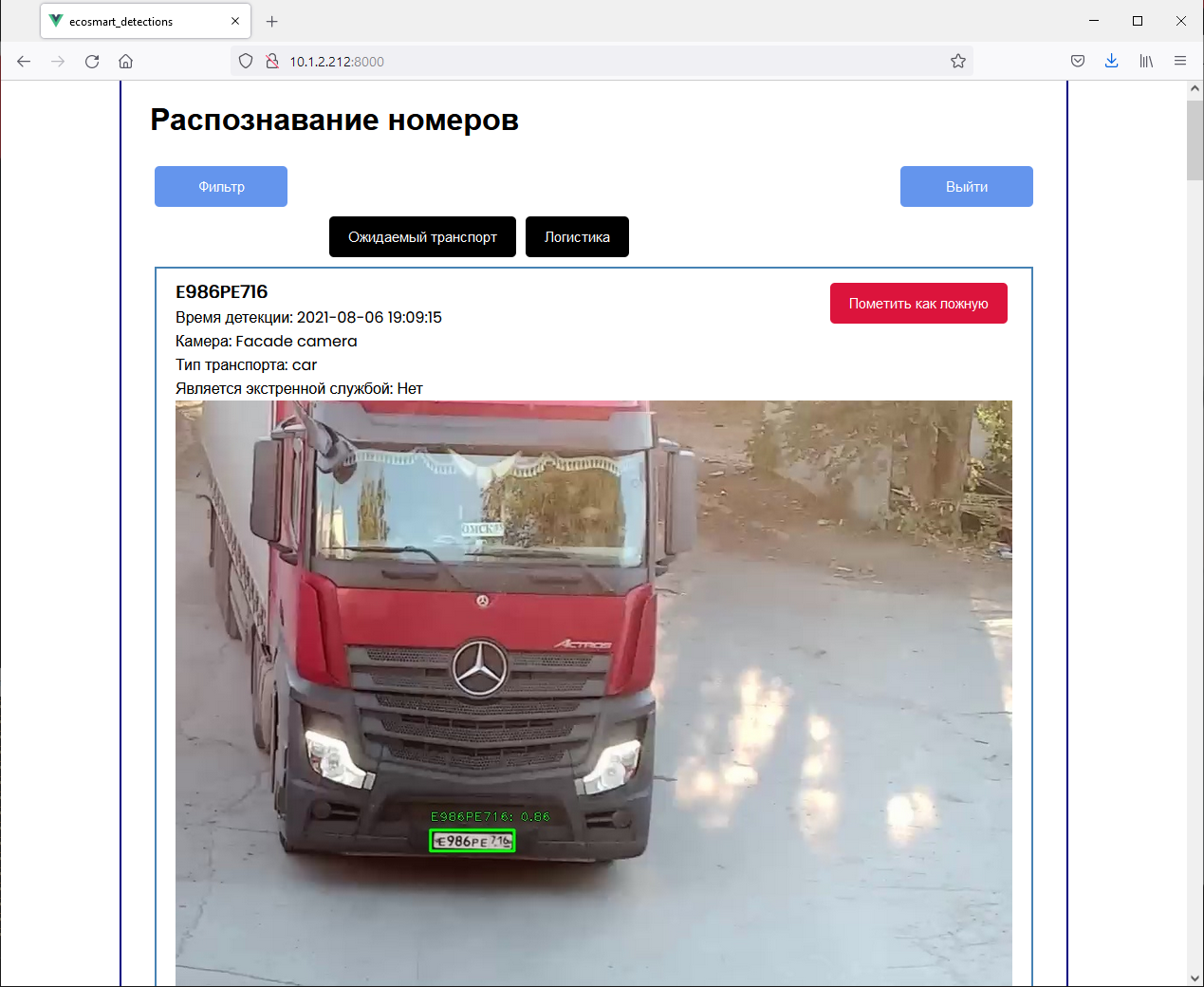
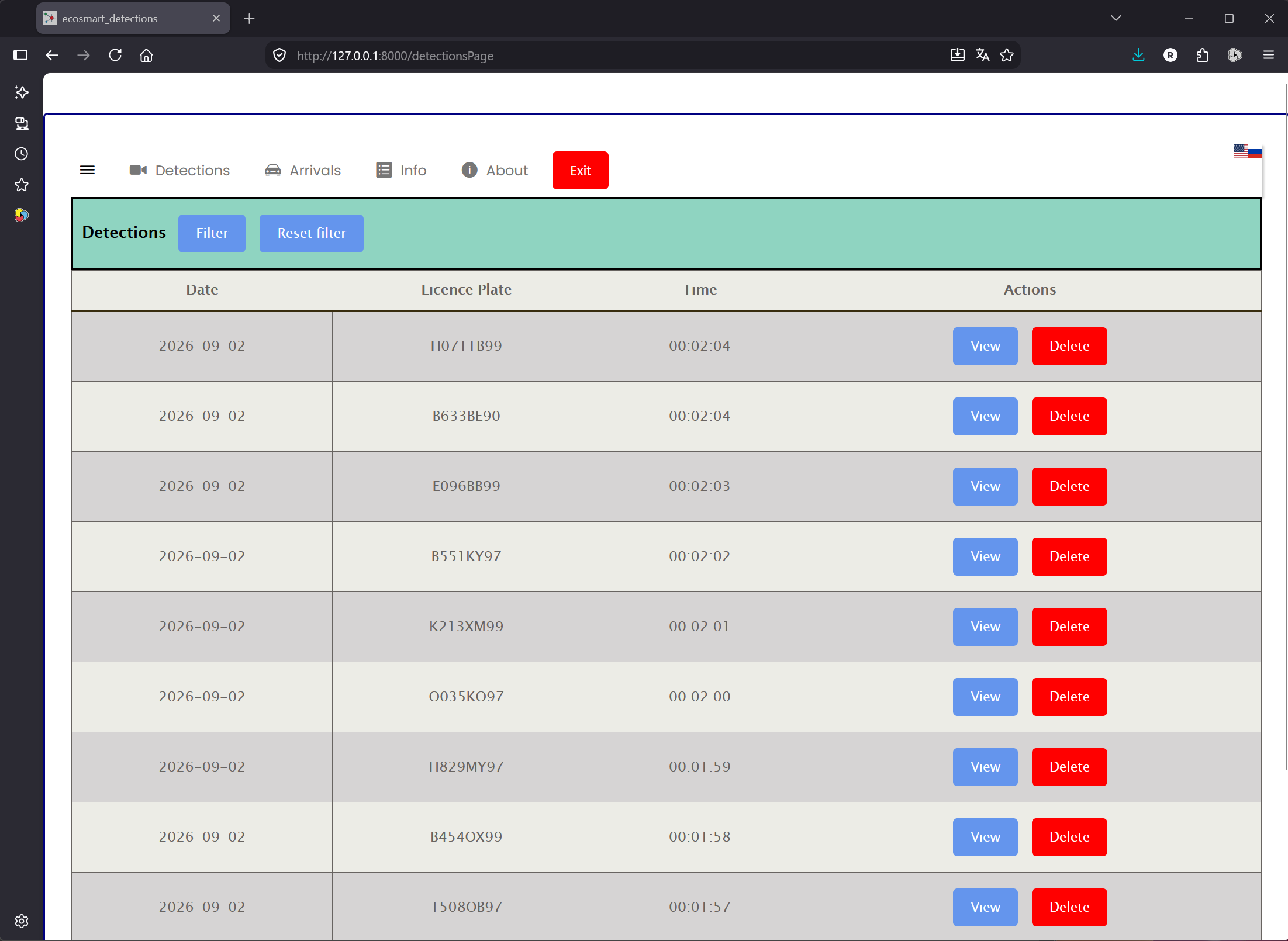
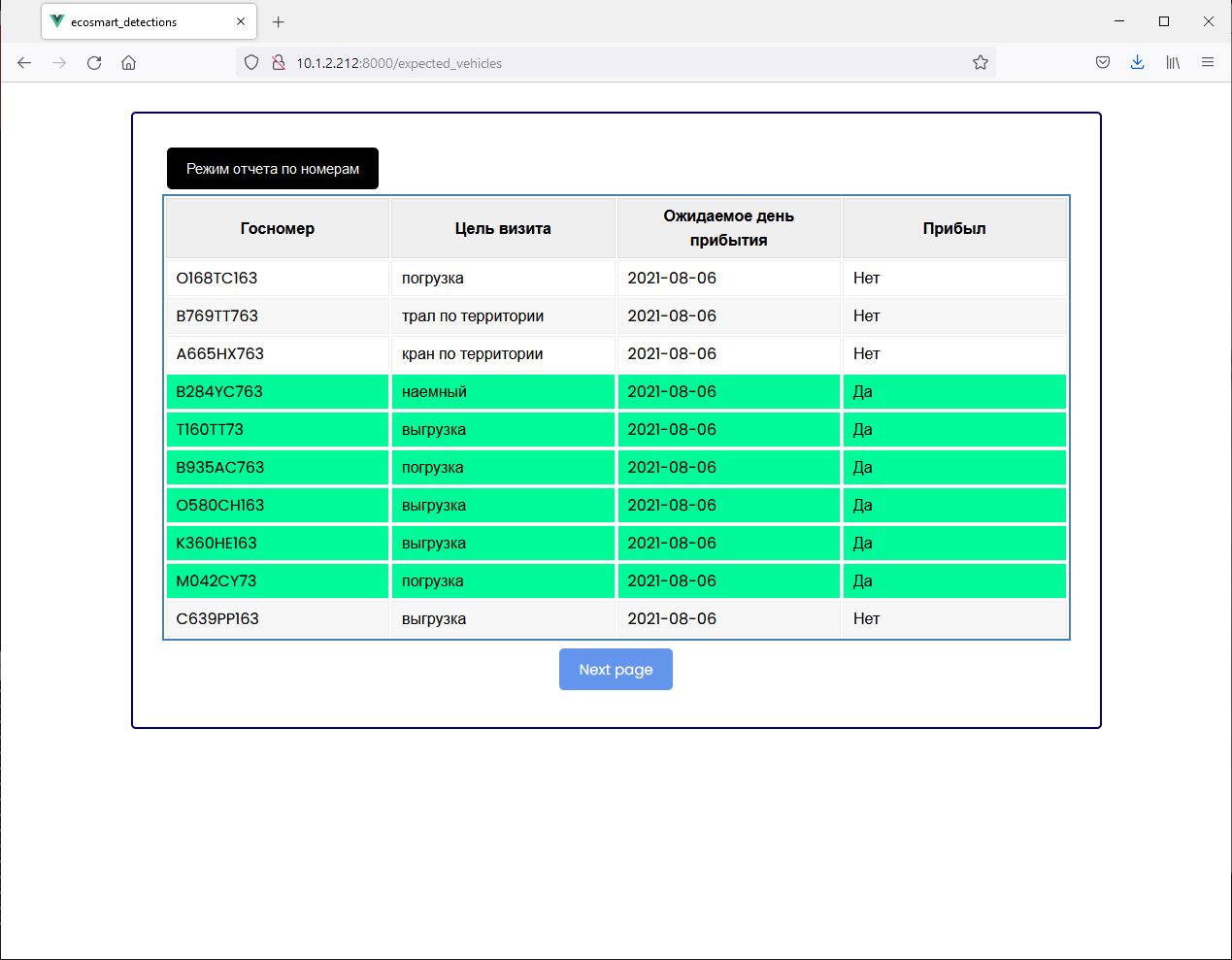
A license-plate-recognition vehicle access-control system built for a real site: cameras feed a custom neural-network pipeline that detects and reads plates, checks them against a daily whitelist/expected-arrivals list, optionally triggers a barrier relay, reports every detection to a backend with a web front end for operators, and notifies the logistics team (email and/or SMS) that a vehicle has arrived for unloading.
Overview
The system automates vehicle access control at the site's gate. Cameras watch the entrance; a custom deep-learning pipeline (MTCNN for plate detection, an STN + recognizer net for reading it) picks the license plate out of each frame and reads it directly off the live feed — no manual lookup. Every read is checked against a daily list of expected vehicles logistics has scheduled for loading or unloading; a match can open the barrier automatically, and every detection — matched or not — is logged for operators to review.
Highlights
- ANPR system design. Designed and built the vehicle automatic number-plate recognition (ANPR) system end to end, on custom deep networks (MTCNN, STR-Net).
- MTCNN pipeline optimization. Ran an in-depth analysis of MTCNN and restructured the detection pipeline down to P-Net and O-Net only, dropping R-Net entirely — cutting GPU load with no loss in accuracy.
- Real-time C++ pipeline. Migrated the core video-frame processing loop from Python to C++, cutting per-frame processing time to 11–13.5 ms (~75–90 fps) — about 1.5× faster than the Python implementation.
- Dataset & experiment tooling. Customized LabelImg for the company's metadata format, led the annotation team, and built the dataset validation pipeline; set up on-prem data/experiment versioning (MLFlow, DVC).
- Business impact. Automatic recognition of expected truck convoys approaching the site, wired into the logistics notification system, eliminated vehicle downtime and sped up unloading.
In production, this automatic recognition of expected vehicles — tied into the logistics notification system — eliminated vehicle downtime at the gate and sped up unloading, by removing the manual step of checking each truck against the day's schedule.
(private repository — happy to share access or a demo on request)